Why Floral Cupcake Decorating Feels Like Therapy
Share
Floral cupcake decorating feels like therapy because it combines rhythmic hand movement, gentle focus, and immediate creative reward, the same conditions that make activities like knitting, pottery, and painting so calming. When your hands are doing something specific and your eyes are following something small and close, your nervous system settles. The to-do list gets quiet. Most people describe the experience as the first time all day they actually stopped thinking.
I started making floral cupcakes because I loved travel and botany and the idea of capturing a place in frosting. What I didn't expect was how much the act of making them would become the thing I looked forward to most. Not the finished cupcake. The making.
There's a particular kind of quiet that comes over you when you're piping a petal. I noticed it early on and didn't have words for it at the time. I just knew that an hour of decorating left me feeling more like myself than almost anything else I did in a day.
Turns out, there's a reason for that.
What's Actually Happening
Occupational therapists and psychologists have studied repetitive, creative hand work for years. Knitting, pottery, bread-making, painting: these activities activate the same neural pathways as meditation. Your brain gets the signal that you are doing something deliberate and contained, and your nervous system follows. The anxious hum underneath the day gets quieter.
Floral cupcake decorating sits squarely in this category. The motion of piping is rhythmic. Each petal follows a pattern. And the feedback is immediate: you can see exactly what you just made. That combination, rhythm plus repetition plus visible result, is genuinely calming in a way that scrolling or watching TV isn't, even when those things feel restful on the surface.
Passive Rest Versus Active Rest
I spent years reaching for the couch when I was depleted. I'd watch something, scroll through my phone, lie there not quite recharging. And I noticed I'd often feel just as tired an hour later as when I'd sat down.
What I've come to understand is that passive rest quiets your body but doesn't restore the parts of you that get worn down by a demanding day. Active rest, the gentle focused kind where you're making something with your hands, does something different. It brings you back to yourself in a way that lying on the couch doesn't quite reach.
This is why I hear from customers who say decorating is the first hobby that's actually helped them decompress. Not just stop, but come back.
I think the learning curve matters here too. If a creative hobby is frustrating before it's satisfying, it loses the restorative quality pretty fast. With floral decorating, you can pick up a piping bag, follow a few steps, and end up with something that looks genuinely beautiful on your first try. And if you mess up, well the beauty of frosting is that it’s very forgiving. You can easily scrape away and start over. Giving you the opportunity to improve each cupcake from the last. That immediate reward is part of what makes it work.
Why Flowers Specifically
There's a concept in environmental psychology called attention restoration theory. The short version: natural imagery, including flowers, has a measurable effect on stress and mental recovery. This is partly why flower arranging has been used in therapeutic settings for so long.
There's also something to be said for whimsy. A buttercream rose isn't just calming to make, it's delightful. And I think we underestimate how much our brains need that, something that is simply, unapologetically pretty, with no productivity attached to it whatsoever.
When I'm piping buttercream petals, I'm working with shapes my brain is already wired to respond to. The soft curves, the layered structure of a rose or a ranunculus, the colors of real botanicals in frosting form. Something in it goes a little deeper than a regular craft. I don't fully understand it. I just know how I feel when I'm done.
The Ritual I've Built Around It
Part of what makes decorating feel restorative for me is that I've made it a ritual. I set up my space. I get my tools out in a particular order. I choose my colors. I put on something to listen to. And then I just make flowers for a while.
The whole sequence has a beginning and a middle and an end, which is something my days rarely have. There's no notification at the end of piping a petal. Nobody needs anything from you while you're rotating a flower nail. It's just you and the frosting and whatever you're making.
That hour is mine in a way that almost nothing else is. And I think that's the real reason it feels like therapy. Not just the hand movement or the focus, but the fact that it belongs completely to you.
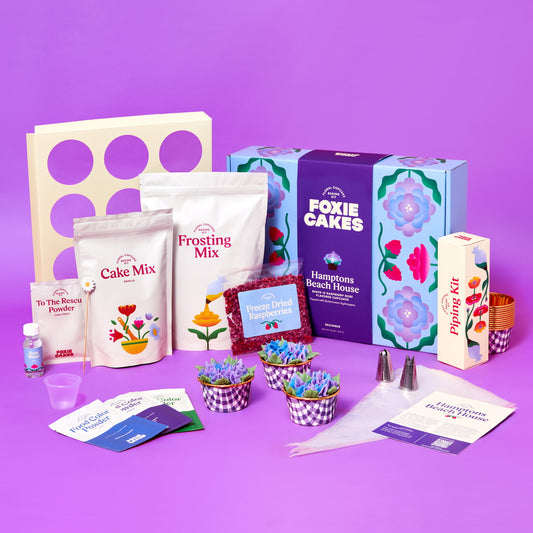
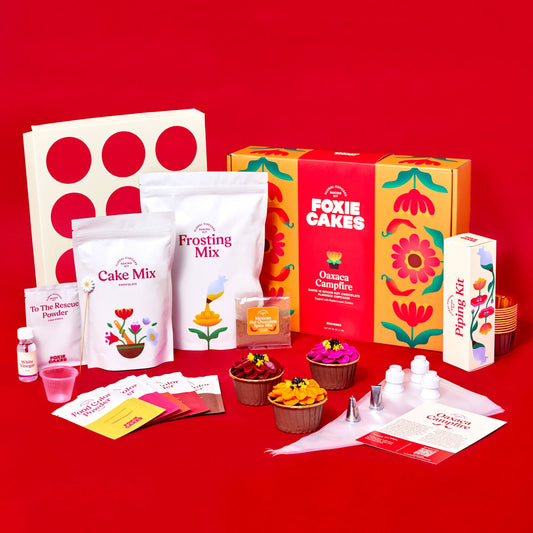
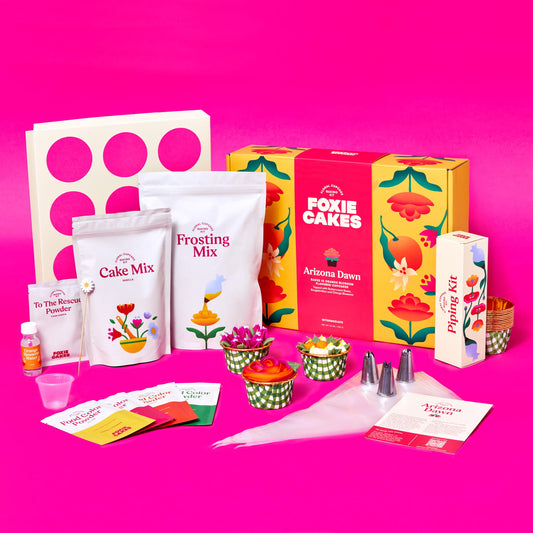
If you're looking for an easy way into that ritual, Foxiecakes kits are how I'd start. Everything is already chosen and portioned, which means you skip the part where you spend 45 minutes at the craft store second-guessing tip sizes. You just sit down, open the box, and make something. That simplicity is actually part of the point. The fewer barriers between you and the making, the easier it is to actually do it.
It Has Nothing to Do With Being Good
I want to be clear about this because I think it matters. You do not have to be talented at this for it to give you what I'm describing. The therapeutic quality of making something with your hands is not contingent on the result being perfect.
The slightly lopsided flower, the petal that came out thicker on one side, the color that bled a little at the edge: those are yours. You made them. And there is something in that act of making, in the evidence that your hands were here and they created something, that is one of the oldest and most reliable ways humans have of feeling okay.
If you've been looking for the hobby that gives you more than it takes, I think this might be it.